Trip Detail
Information
Trip Name
Asthapath Tirthapuri with Kailash Mansarovar Tour 11 Days
Duration
11 Days / 10 Nights
Destination
Western Tibet, China
Starting Point
Kathmandu, Nepal
Ending Point
Kathmandu, Nepal
Trip Type
Spiritual Pilgrimage & Overland Adventure
Major Highlights
Mount Kailash, Lake Mansarovar, Asthapath, Tirthapuri
Maximum Altitude
5,630 m (Dolma La Pass)
Highest Lake
Lake Mansarovar (4,590 m)
Sacred Trek
3-Day Kailash Kora (Approx. 52 km)
Additional Pilgrimage
Tirthapuri Kora & Asthapath Darshan
Religions
Hinduism, Buddhism, Jainism & Bon
Best Season
April–June & September–October
Difficulty
Moderate to Challenging
Transportation
Overland by Tourist Vehicle
Accommodation
Hotel, Guesthouse & Pilgrim Lodge
Permit Required
Tibet Travel Permit & Alien Travel Permit
Ideal For
Pilgrims, Spiritual Seekers & Adventure Travelers
Our Ashtapath and Tirthapuri pilgrimage tour is unique as compared to other Kailash Mansarovar tours which have only Lake Mansarovar and Kailash Kora as their highlight. In addition to all that, we offer you the opportunity to discover some of the most sacred spots in the Mount Kailash area, including the highly venerated Ashtapath and Tirthapuri, both of which hold profound significance for followers of various religions such as Hinduism, Buddhism, Jainism, and Bon. This Kailash Asthapath Tirthapuri Yatra takes you deeper into these sacred lands than any standard pilgrimage, and is offered as a specially curated Kailash Asthapath Tirthapuri Tour for travelers seeking a more immersive route. The word "Ashtapath" literally means "Eight Steps".
It has great importance in the traditions of Jain faiths and it's widely believed that the site was very close to where the first tirthankara Lord Rishabhdev attained Nirvana or moksha, which is why many refer to it as an Ashtapad Jain Tirth Mount Kailash Tour. Ashtapath lies within the hallowed land around the famous holy Mount kailash. This makes the Ashtapath one of the most revered pilgrimage destinations in the world by Jains, and it is a central highlight of our Ashtapath Jain Tirth Kailash journey, often booked as part of a complete Kailash Asthapath Tirthapuri Package. Pilgrims today are visiting the designated viewpoint to view this sacred region, and for those planning ahead, our Kailash Asthapath Tirthapuri 11 Days route is designed to cover every sacred site at a comfortable pace.
Another very revered pilgrimage spot is located northwest of Mount Kailash, near the banks of the Sutlej River. This holy place is sacred for both Hindus and Buddhists, and forms an essential part of any Tirthapuri Kailash Yatra.
It's known for its monastery, naturally occurring hot spring, meditation caves, and spiritual connection with the great saint Guru Padmasambhava (Guru Rinpoche). Travelers researching a Tirthapuri Hot Springs Kailash Yatra itinerary often highlight this stop as a favorite. According to the Hindu tradition, this place has close associations with the legend of Bhasmasura. Hence, visiting Tirthapuri becomes one of the topmost priorities when you come to visit Lake Mansarovar, followed by taking the famous Kailash parikrama.
One of the holiest and most majestic natural attractions on earth, mount kailash and Mansarovar lake is found at remote corners of west Tibet. Whether you're a follower of Hinduism, Buddhism, Jainism or Bon, this pilgrimage site promises an otherworldly adventure, which is why so many pilgrims choose our Kailash Mansarovar Asthapath Tour for a complete spiritual experience.
The Kathmandu and Kailash Mansarovar Yatra begins in Nepal's thriving capital, Kathmandu, a melting pot of ancient temples and Himalayan culture. You then drive across the Tibetan border, from Rasuwagadhi – Kerung into Tibet, before travelling across the immense Tibetan plateau to one of Earth's holiest mountains. Many travelers book this Asthapath Tirthapuri Tour from Kathmandu for its convenient overland route.
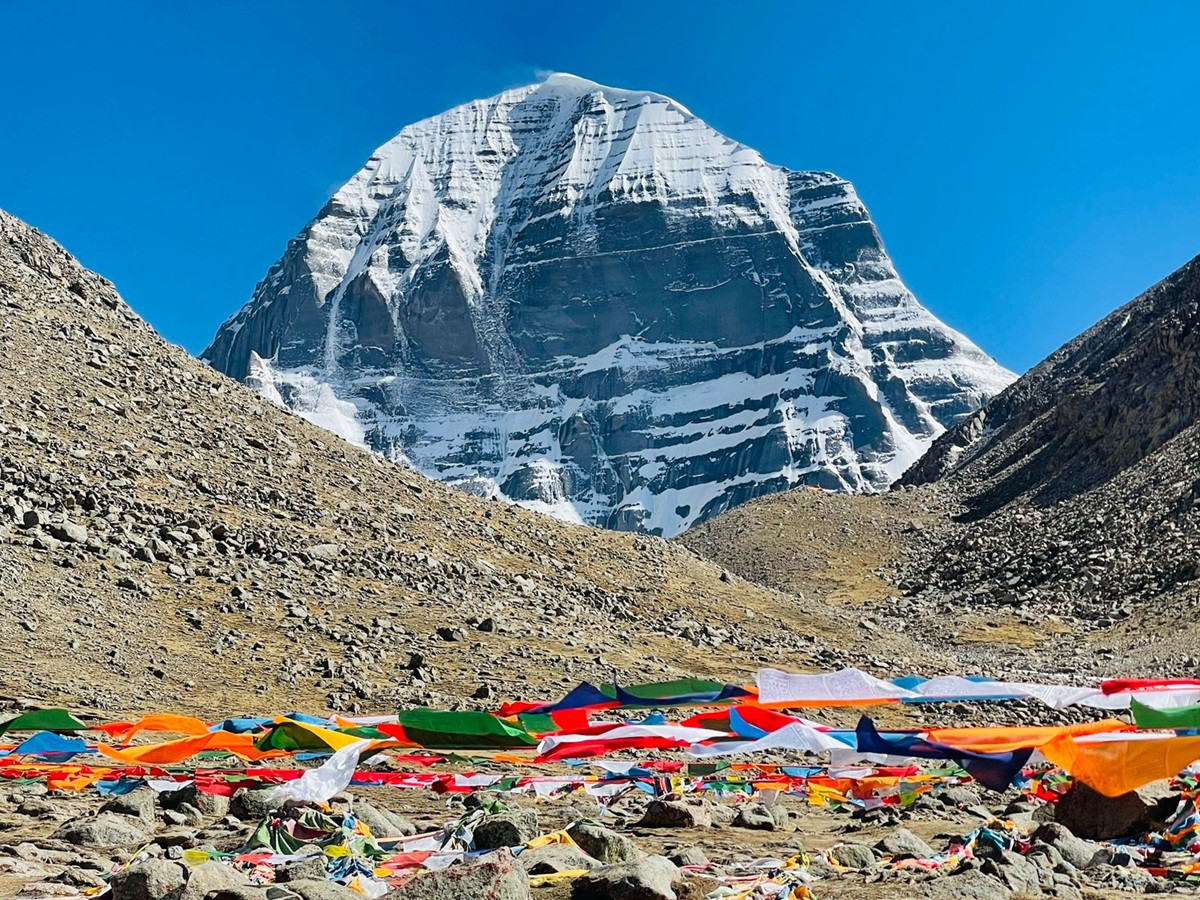
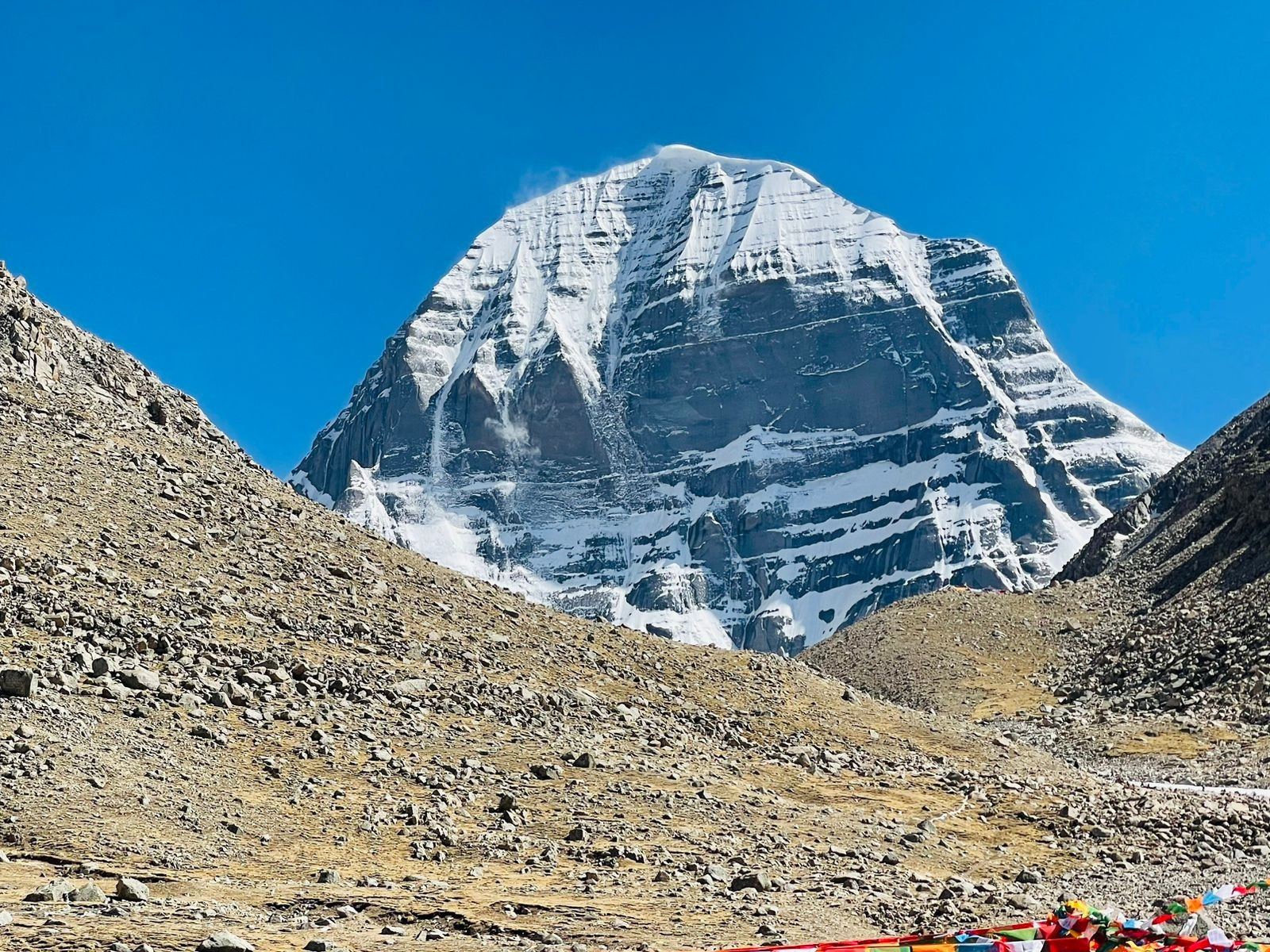
Considered the abode of Lord Shiva on Earth, and in Buddhist cosmology the centre of the world, 6,638-metre-high Mount Kailash is also the most sacred spot for reaching enlightenment. The Kora, or 52km-long circumambulation, around the mountain is said to be one of the most spiritual journeys possible, cleansing a lifetime of sin, and pilgrims often extend their Kailash Parikrama with Asthapath to include these nearby sacred sites. Right next door lies 4,590-metre-high Lake Mansarovar; its clean, blue waters are said to be one of the holiest on Earth.
This special 10-day tour combines the sacred Kailash Parikrama, the holy waters of Lake Mansarovar, the spiritual heritage of Tirthapuri and Ashtapath viewpoint into one holistic package, making it one of the most complete Kailash Asthapath Tirthapuri Package options available today. It will give you an opportunity to explore various spiritual practices which have been practiced by people all over the globe, making the Mount Kailash region the world's most sacred pilgrimage destination. So this yatra is way more comprehensive than your usual "Kailash Mansarovar Yatra", offering travelers a true Asthapath Darshan Kailash and Tirthapuri Darshan with Kailash experience in a single itinerary.









Experience a complete Kailash yatra, including Ashtapath and Tirthapuri.
Darshan of the sacred mountain Mount Kailash, which is considered the abode of lord shiva
Holy rituals and spiritual experience at Lake Mansarovar.
Visit Tirthapuri, which houses the Meditation Site of the Guru Padmasambhava as well as some sacred hot springs.
Explore Ashtapath – this revered Jain pilgrimage site has associations with Lord Rishabhdev.
Take a scenic overland drive from Kathmandu to Tibet through the Kyirung border.
Acclimatisation in Kyirung for a safer high altitude journey.
Panoramic view of the Himalayas against the backdrop of the huge Tibetan Plateau.
3-Day Kailash Kora (Parikrama), covering approximately 52km.
Cross the sacred Dolma La Pass (5,630m) -the highest point of this pilgrimage.
Visit the sacred lake, Gauri Kund, situated below Dolma La Pass.
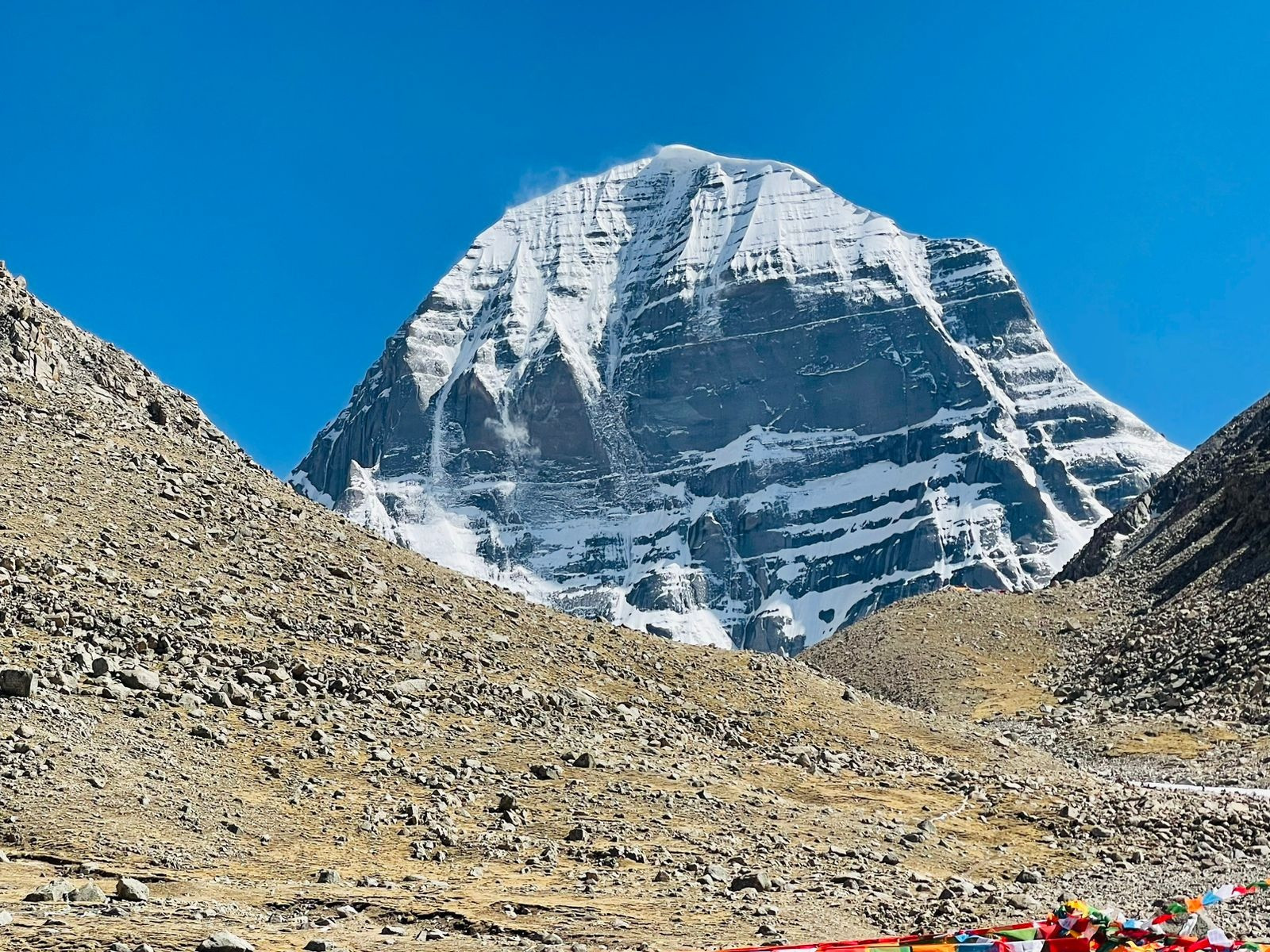
Spectacular close-up view on North Face Of Mount Kailash from Diraphuk
Immerse yourself in Tibetan monasteries, culture and traditional pilgrimage routes on this comfortable overland journey led by an experienced crew with support along the way.
This is a spiritually enriching journey for all who practice Hindu, Buddhist, Jain and Bon faiths.
According to tradition, Ashtapad is located either at Mount Kailash's south face or nearby. The closest viewpoint for visitors travelling to the Kailash region today (Ashtapad viewpoint) is found about 5 kms away from Darchen, which gives one of the nearest possible views of the southern face of Kailash, a key stop for anyone joining our Mount Kailash Asthapath Tour.
Kailash Yatra tour guides also describe Ashtapad to be located about 5 kms away from the southern face of Mt. Kailash; however, the precise original location of Ashtapad (as described in Jain scriptures) is not historically proven, a detail our Asthapath Kailash Yatra guides often explain to pilgrims visiting the viewpoint.
Traditionally Ashtapad Jain Tirth is believed to be situated in the Mount Kailash - Lake Mansarovar region in Ngari (Western Tibet), China. The Jains hold it to be the sacred land where the first Jain Tirthankara, Lord Rishabhdev (Adinath), achieved Moksha (Nirvana), making it a defining stop on any Kailash Mansarovar with Tirthapuri journey.
The precise historical spot for the original Ashtapad remains unknown to this day; however, it is invariably located somewhere at or in the vicinity of Mount Kailash in the imaginations and the itineraries of the pilgrims, which is why many travelers seek out a dedicated Asthapath Tirthapuri with Kailash Yatra to visit the region properly.
Ashtapad Darshan is normally available from a specific place at the base town, called Darchen. From there, one can easily reach the view point on a vehicle for about 5-7km towards south-southeast from Mount Kailash; this spot provides a wonderful view of the sacred south face of the Kailash, and is included in our Kailash Asthapath Tour for pilgrims arriving in Darchen.
One is supposed to take a vehicle up to a point and then walk a few meters for darshan. Similarly, Ashtapad is located between Lake Mansarovar and Mount Kailash, as in the literature of Jainism, which places it firmly within the sacred landscape covered by our Kailash Parikrama with Tirthapuri itinerary.
|
Feature |
Details |
|
Country |
Tibet Autonomous Region, China |
|
Region |
Ngari (Ali Prefecture), Western Tibet |
|
Nearest Town |
Darchen |
|
Near |
Mount Kailash and Lake Mansarovar |
|
Distance from Mount Kailash |
Approximately 5 - 7 km (traditional Ashtapad viewpoint) |
|
Religious Importance |
Moksha site of Lord Rishabhdev (Adinath), the 1st Jain Tirthankara |
High on the Sutlej River in West Tibet, Tirthapuri celebrates a unique blend of geology and spirituality with its holy hot springs, a highlight often featured on our Tirthapuri Hot Springs Kailash Tour. From a geological perspective, this hot water comes from the interior of the earth and finds its way to the surface through cracks caused by the active tectonic fault lines of this territory.
The journey to the surface also takes along various minerals, which are left behind at the springs to create deposits of travertine over millennia, a natural wonder pilgrims encounter on the Kailash Yatra with Asthapath and Tirthapuri.
Religiously, both Hindus and Buddhists look upon these as cleansing waters. They perform ritual ablutions here, and are said to get rid of bad karma and to cleanse the soul of sin and prepare the way for Nirvana, especially due to its association with the great Guru Padmasambhava (Guru Rinpoche), making it a spiritual centerpiece of the Mount Kailash Asthapath Darshan Tour. Tirthapuri continues to be one of the most revered sites on the extended Kailash trek, drawing devotees each year on the Kailash Asthapath Pilgrimage.
The pilgrimage has 2 blessed Kora, where you go on 2 sacred circuits. One is the Kailash Kora, which is the more popular religious circuit around Mt Kailash; the other is the Tirthapuri Kora, which makes a smaller religious circuit around the Tirthapuri Monastery and the sacred springs, together forming the spiritual core of every Kailash Mansarovar Asthapath Yatra.
This Tirthapuri Kora is a circumambulation of the monastery at Tirthapuri, holy hot springs, meditation caves and surrounding holy hills. Tirthapuri is one hour long, far easier than Kailash Kora and possible for all pilgrims to do.
Taking a bath in the mineral hot springs of Tirthapuri and then taking a clockwise walk around the sacred land, pilgrims pray to purify themselves of their negative karma, a ritual central to the Asthapath Darshan Tour experience.
In Tibetan Buddhism, it is the place linked to the master Guru Padmasambhava (Guru Rinpoche). For the Hindus, it is related to the story of Bhasmasura and considered the holiest place of pilgrimage of the Kailash region next to Kailash and Manas Sarovar, which is why travelers joining our Kathmandu to Kailash Asthapath Tirthapuri route make it an early priority.
The main purpose of this trek and the most arduous part of the pilgrimage is the Kora (circumambulation) of the sacred Mount Kailash (6714 m), which takes 3 days (52 km trek), forming the heart of our 13 Days Kailash Asthapath Tirthapuri Tour.
This journey starts from Darchen, completes via Dirapuk, crossing over the steep pass of Dolma La Pass (5630 m), before reaching Zutulpuk and ending again in Darchen. Hindus, Buddhists, Jains, and Bon practitioners circle the sacred Mount Kailash to attain spiritual peace and have their sins of a lifetime washed out by walking one kora around it, an experience pilgrims often describe as a journey Mount Kailash with Asthapath simply cannot compare to.
Most people walk a kora around Mount Kailash in a clockwise direction, but the Bön tradition requires it to be in the other direction.
The Tirthapuri Kora is a holy ritual of circumambulating Tirthapuri Monastery, hot geothermal springs, meditation caves and adjacent sacred sites. The Kora, usually undertaken clockwise, is one hour long and purifies bad karma and cultivates spiritual merit, and remains a favorite ritual step for travelers on the Tirthapuri Kailash Yatra.
One of the most sacred Buddhist pilgrimage destinations in Western Tibet is Tirthapuri, which is closely linked with Guru Padmasambhava (Guru Rinpoche). It is thought that the guru may have come to meditate at the monastery and the neighboring meditation cave sometime in the 8th century, and this now draws visitors seeking a blessing, purification and a sense of well-being, making it a spiritually rich stop on the Asthapath and Tirthapuri Kailash Package.
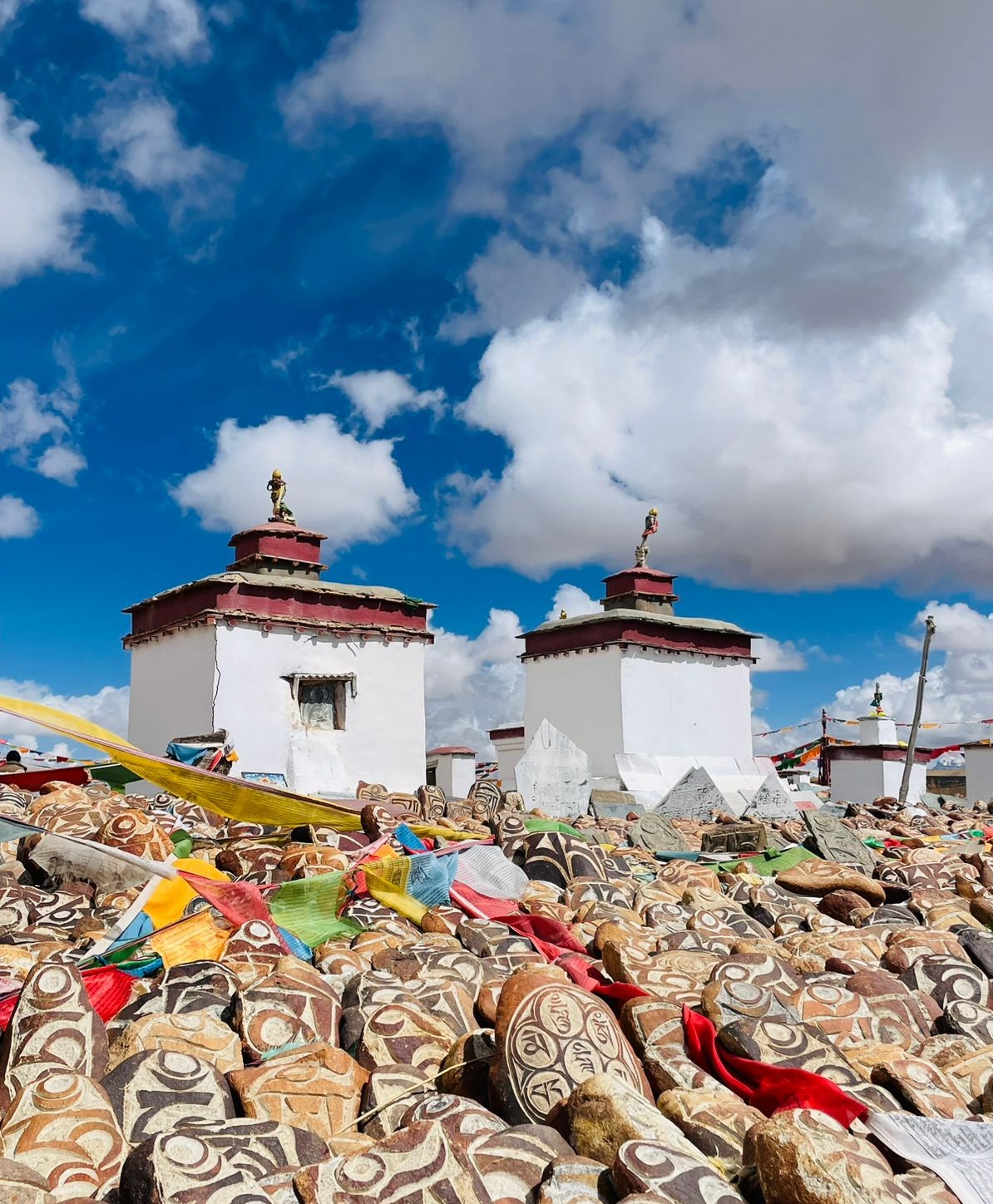
This place is decorated with prayer flags, mani walls, historic stupas, relics and is surrounded by geothermal springs, which are holy waters that clear the pilgrim's negative karma. Tibetan Buddhists can even still go today to walk the Tirthapuri Kora, offer their prayers and make a visit to the Guru Rinpoche Cave, a ritual sequence built into every well-planned Kailash Asthapath Tirthapuri Yatra.
Nestled on the edge of the sacred Tirthapuri Kora, the Karma-Testing Hole is a fun, hands-on spiritual experience, and often the most memorable moment travelers recall from the Best Kailash Asthapath Tirthapuri Package. Pilgrims approach a deep, round hole carved in the rock face of the ancient prayer wheel and, without looking, reach inside to retrieve two small stones that supposedly reflect the status of their soul's karmic residue.
If they retrieve two white stones, they can be assured of their clean, positive karma; one black and one white suggests that they are leading a well-rounded life but should probably look to make minor spiritual adjustments, a nuance guides often share during the Kailash Asthapath Tour.
Two black stones indicate that there are significant negative karmic forces at play in the pilgrim's life, and an immediate period of deep self-reflection, contrition and correction of the way they're living is in order.
It is believed by the Jain community that Ashtapad is the Holy Mountain, where the first Tirthankar Shri Rishabhdeva (Adinath) achieved Nirvana, a legacy that draws devoted travelers to our Kailash Asthapath Tirthapuri Package each year.
Holy texts mention that the devoted son of Lord Rishabdeva and Emperor of India Bharata constructed an opulent Temple on Ashtapad in memory of his father. They decorated the Temple with 24 diamond-jeweled statues, each dedicated to each of the 24 Tirthankar(s) with other rich ornaments and gems of gold and crystals, making it the Most Glorified Holy Temple of the ancient times for the followers of the Jain religion.
The actual Mount Ashtpad, along with the famed precious gems, is undiscovered till today and represents faith and liberation for the followers, and remains one of the great unsolved mysteries pilgrims reflect on during the Kailash Mansarovar Asthapath Package.
Jain beliefs suggest that Ashtapad is the holy mountain where Lord Rishabhdev (Adinath), the first Tirthankar, achieved Nirvana. For centuries, in many texts and traditions of the Jain religion, Ashtapad has been linked with, or considered to be located near, Mount Kailash, which has made the Kailash mountain a significant pilgrimage spot for Jains, and a central question travelers ask before booking a Kailash Asthapath Tirthapuri Tour.
However, modern-day history and archaeological investigation have not yet confirmed whether the Ashtapad mountain and Mount Kailash are actually the same.
Some argue that Ashtapad was situated near Mount Kailash in the area of Kailash-Mansarovar. At the same time, some other opinions go with the theory that it was another mountain peak whose exact whereabouts are unknown today, a debate our guides address for every group joining the Kailash Asthapath Pilgrimage.
Even now, most pilgrims visiting the Kailash area concede that Ashtapad has a religious relationship with Mt Kailash, although its definite location isn't confirmed. Because of this popular link, Ashtapad Darshan is an important feature of several Kailash Yatra tours, and Jain pilgrims feel delighted and sacred as they take 'darshan' of this place that is rumored to be related to the Nirvana of Lord Rishabhdev, making it a must-include stop on our Asthapath Tirthapuri Tour.
Ashtapad Jain Tirth is one of the holiest pilgrimage destinations in Jainism, which is known as the Moksha(Nirvana) place of the first Tirthankara, Lord Rishabhdev (Adinath). The name Ashtapad signifies "Eight Steps"; the legends say it was a divine mountain built by Emperor Bharata, the son of Lord Rishabhdev, in the form of a precious gemstone temple in reverence of his father's enlightenment, a story that inspires many to book our Ashtapath Tirthapuri Tour from Kathmandu.
Since the Holy site of Kailash in Western Tibet has been strongly associated with Mount Kailash and Ashtapad by several Jain traditions and schools of thought, despite being unknown to historians till now, the Ashtapad is closely linked to Kailash Yatra, which is why devotees often search for a dedicated Kailash Asthapath Tirthapuri Tour rather than a standard pilgrimage package.
Thus, the Kailash Mansarovar Yatra is always considered to be incomplete without the holy visit of Ashtapad Darshan by many Jain pilgrims, believing it to be the land where Lord Rishabhdev gained Nirvana, and it remains the spiritual highlight of our Kailash Asthapath Tirthapuri Package.
For U.S citizens and American passport holders, this is a much more extensive and spiritually meaningful journey than the traditional Mt Kailash Yatra, and is increasingly booked as a complete Kailash Asthapath Tirthapuri Tour for US Citizens. This extended pilgrimage covers not only the Kailash Parikrama and the holy bath in Lake Mansarovar but also Tirthapuri and Ashtapad, making this pilgrimage journey all the more inclusive and rich in meaning.
This has now become the chosen pilgrimage for American travelers in recent times to undertake a richer pilgrimage of the Himalayas. U.S travelers need to take an organized tour and must arrange for Tibet tour permits prior to entering the land, which is why we designed a dedicated Ashtapath Tirthapuri Kailash Package for USA Pilgrims to simplify the process.
American pilgrims start their tour in Kathmandu, Nepal, then overland into Tibet. Along the way, they acclimatize and have plenty of time to explore sacred western Tibet comfortably and securely.
Besides the normal Kailash tour, this trip also offers visits to Tirthapuri (holy hot springs and Guru Rinpoche Monastery) and Ashtapad, the holy Jain pilgrimage destination (site of Lord Rishabhdev's liberation), a highlight of our Kailash Ashtapath Tirthapuri Yatra from USA offering.
Therefore, American pilgrims have the chance to enjoy significant Hindu, Buddhist, and Jain heritage all in one trip!
This trip is perfect for American pilgrims who seek something more than just the darshan of Mount Kailash. They will benefit from the blessings of Lake Mansarovar, the Kailash Kora, the sacred ambience of Tirthapuri and magnificent Ashtapad views on their one-of-a-kind pilgrimage through the world's holiest land, a journey we've packaged specifically as our NRI Kailash Asthapath Tirthapuri Yatra.
The Yatra to foreign travellers has been opened since 2026 through approved tour agents, provided you obtain the permits for Tibet and the Visas to China. This journey to Kailash Parikrama, Lake Mansarovar & Tirthapuri is all available through the standard Yatra packages, including our dedicated Asthapath Tirthapuri With Kailash Mansarovar Tour 2026 for pilgrims planning this season.
However, the authentic location of Ashtapad is prohibited from public entry by the Chinese Government, so you may not be able to reach the place where Ashtapad exactly lies. Instead, you may go to the designated Ashtapad viewing area, which is in the Serlung region, and you can obtain Ashtapad Darshan.
Charan Sparsh Status
Charan Sparsh (direct physical touch on the feet of Kailash) to foreign visitors is not possible according to the rules & regulations in place right now. Instead, they can visit the authorised Charan Sparsh point at Derapuk, offer homage and see Kailash Parvat closely.
Inner Kora Status
The Inner Kora of Mount Kailash is now a difficult journey for the majority of foreign travelers since the only allowed and the current normal course is Outer Kailash Kora/Parikrama. To conduct an Inner Kailash Kora, one requires specific special permissions, and that's typically not a part of pilgrim tours.
There has been no formal declaration of any change to the current access restrictions for the year 2027. Access for Mount Kailash Kora, Mansarovar and Tirthapuri should continue as per the previous regulations, available through certified travel agencies, unless new regulations come into effect, and travelers can plan ahead with our Asthapath Tirthapuri With Kailash Mansarovar Tour 2027. Access to Ashtapad Darshan shall continue from the specified viewpoint, not the original site of Ashtapad.
Charan Sparsh Status
The Charan Sparsh path would still be closed, and devotees can only view Mt Kailash from the nearby viewpoint; they will not be able to touch Mount Kailash.
Inner Kora Status
Still, from the viewpoint, you can get a close and spiritual experience. The Inner Kora will not be accessible and open for the visit in 2027. Devotees are advised to undertake the Outer Kailash Kora 52 KMs, a route fully covered in our Asthapath Tirthapuri With Kailash Mansarovar Tour 2026/2027 planning guide.
No official policy for 2028 has been released yet. Assuming no changes in policy are made, pilgrims can expect the same system as currently in place, and can already reserve a spot on the Asthapath Tirthapuri With Kailash Mansarovar Tour 2028. Mount Kailash, Lake Mansarovar, and Tirthapuri are still open, and pilgrims can undertake tours for these destinations; the original Ashtapad remains restricted access.
Charan Sparsh Status
Charan Sparsh Physical Charan Sparsh to the origin of Ashtapad is not allowed by the administration unless it changes the present regulations. Pilgrims can still make it to the Charan Sparsh designated viewpoint to offer prayers to the holy site and witness the one of the closest allowed views of Mt. Kailash, an experience many multi-year travelers book through our Asthapath Tirthapuri With Kailash Mansarovar Tour 2027/2028 package for flexible scheduling.
Inner Kora Status
There has been no news of opening Inner Kailash Kora for pilgrims till date.
It should be presumed that only Outer Kailash Kora would be accessible, unless the Tibet authorities update regarding changes of the policy before the pilgrimage season. Be sure to check with your tour operator for the latest permit policies before finalizing your plans, especially if booking a Kailash Ashtapath Tirthapuri Yatra 2026/2027 spanning two pilgrimage seasons.
The 13 Day Asthapath Tirthapuri with Kailash Mansarovar Tour package is priced between USD $1,350 per person for bigger groups and up to USD $4,250 per person for a solo traveler, depending on how many people are booking, making our Kailash Asthapath Tirthapuri 13 Days Itinerary flexible for both solo pilgrims and larger groups.
Just like most Kailash tour packages, prices go down when the number of tourists goes up. This is mainly because expenses such as travel permits, Transportation, Guides and other operational costs are divided among many, which is why many travelers search for the Best Kailash Asthapath Tirthapuri Package before booking as a group.
A solo trip (1 pax) costs USD $4,250. A group trip from 2 to 5 travelers costs USD $2,850 per person. A group of 6 to 10 pilgrims will be charged USD $1,450 per person, and a group of 13 to 16 participants will be charged the lowest price of USD $1,350 per person, offering great value for those booking the full 13 Days Kailash Asthapath Tirthapuri Tour.
In this package, you will find a Tibet Travel Permit, transportation, accommodations and food during your travel in Tibet, an experienced and authorized local tour guide, as well as other logistics for the Kailash tour, all included as standard in our Kailash Mansarovar Asthapath Package.
International flight to and from Nepal, travel insurance, personal expenses and gratuities, as well as the expenses for horses or porter hire in Kailash Kora, are generally not included in the price.

Your health, comfort and spiritual satisfaction are our most important responsibilities throughout the Asthapath Tirthapuri with Kailash Mansarovar Tour 11 Days.
All details of the trip, including permits, transportation, lodging, meals, and high-altitude acclimatization, are expertly managed by our team. We continuously assess the weather and road conditions and monitor the group's health.
The itinerary can be modified if necessary to guarantee your safety and satisfaction during the pilgrimage without minimizing your trekking and pilgrimage experience.
Classic Vacations Nepal is devoted to promoting and practicing responsible and sustainable tourism in the Himalayas and Tibet.
We deeply value local culture, support the sensitive Himalayan habitat, and honor the local communities involved in this great voyage. 5% of your trip’s entire cost goes to the education, health and development projects that Pioneer Foundation Nepal runs for children and locals in the rural Himalayas, as we partner together in making a difference, to take you traveling as a pilgrim and at the same time a traveler of responsible tourism.
 1400m
1400m
 Airport to Hotel (Approx. 7 km)
 30 to 45 Minutes
You'll arrive at Tribhuvan International Airport on the first day of the Kathmandu and Kailash Mansarovar Pilgrimage. Your guide will be waiting outside in the arrival lounge and will escort you to your hotel. Don't be startled by the multitude of taxi drivers mobbing you as you emerge; this is everyday Kathmandu.
It takes between 30-45 minutes to get to Thamel through the warren of alleyways filled with motorcycles, sacred cows and ruined temples jostling between the concrete boxes. You'll check in to a hotel where you can rest or stroll around the town.
You can enjoy the afternoon by exploring the alleys of Thamel, as Tibetans selling singing bowls vie for the sidewalks along with trekking gear retailers and momo stands.
Altitude isn't really an issue, but jet lag is much worse than anyone anticipates, and most new visitors err by doing way too much the first day. The evening's soundtrack is temple bells, blaring horns, and incense. Eat a small dinner at your hotel.

Hotel Shanker or Ramada Encore Kathmandu or Barahi Kathmandu (4 Star)

Breakfast
1550m
Approx. 60 km
7 to 8 Hours
 2 to 3 Hours
 2 to 3 Hours
Beginning at 7 am allows you to avoid the tourist crowds and the heat in Pashupatinath Temple. This most holy Hindu site in Nepal sits alongside the Bagmati River. Its crematorium ghats operate 24 hours, 7 days a week; you'll be in the presence of public, open-air cremations in progress with families praying for the deceased in smoke and chanting.
It may be shocking for some travellers, but this raw spiritual nature is part of what makes Kathmandu what it is.
You'll see lots of monkeys, and they can be quite aggressive; ensure you keep your bags zipped closed and try not to make eye contact. Many of the Sadhus will expect a small donation (around 100 – 200 Nepalese rupees) to pose for photos.
Seventeen kilometers east, in a cave-like building at Doleshor Mahadev, you can view a self-emerging Shiva lingam which the residents say marks the spot where Shiva's head fell off.
The next stop is at Budhanilkantha, where a colossal five-meter Vishnu is seen to be reclining in a pond, where people carry out morning pujas. His tranquil posture does little to indicate the bedlam beyond the gates outside.
We head back to Thamel by 3 pm; tired and dazed from all the sights, sounds and incessant hawkers outside each religious site and temple.
Hotel Shanker or Ramada Encore Kathmandu or Barahi Kathmandu (4 Star)
Breakfast
2800m
160 km
6 to 7 Hours
6 to 7 Hours
After an early departure (6 AM), your vehicle will drive through morning traffic in Kathmandu before joining the Pasang Lhamu Highway. You’ll travel along the Trishuli River past terraced rice paddies where women bend over their work knee-deep in muddy water, transplanting young rice shoots.
Beware of damaged road sections with debris and expect your driver to honk at blind curves- a heart-pounding necessity. Chinese engineers are busy building a highway, and you can expect some 30-minute detours with fine red dust caked everywhere.
After passing over the Nepal-China Friendship Bridge on the Nepal border, the 1-2-hour Chinese immigration at Rasuwagadhi involves the obligatory passport check and full luggage inspection.
You find yourself in the modern Chinese town of Kyirung: a town of wide, paved roads, surveillance cameras, and prayer flags that hang inexplicably next to CPC flags. You will check into a bare, concrete, basic guesthouse ( electric blankets available) and a shared squat toilet.
There will be light headaches and possibly shortness of breath due to the sudden 1400 m altitude jump; drink a good 3-4 liters of water. Tonight you will dine on a typical meal of bland Chinese vegetables and rice. The yaks meat on offer is tasty but may cause trouble with the altitude.
Hotel / Guesthouse in Kyirung
Breakfast (Kathmandu), Lunch, Dinner, Tea/Coffee, Hot Water or Mineral Water (Veg. Meals by Nepali Sherpa Team)
2800m
2 to 4 km (Optional Walk)
2 to 3 Hours
1 to 1.5 Hours
1 Hour
You'll have that familiar pressure on you this morning, a slight headache, and feeling a little breathlessness on the stairs. Luckily for you, it will also serve to stop you attempting tomorrow's potentially dangerous trek to the high Tibetan town of Saga (4600m). Today will be a relaxing walk down to the Old Tibetan Town of Kyirung (2km).
Down below is the Gyirong Valley; you will cross little streams that flow through forest; the same is carved by the Gyirong Tsangpo. In this dream-like world, clouds may actually come past eye-level.
Once again, if you feel good about yourself this evening, and provided you arrived this morning, you could take in the Paldhen Lhamo Monastery (but don't make an effort; acclimatization takes place while you sleep, not by forcing yourself). Make sure that your room is warmed but not too hot and please avoid alcohol this evening.
Hotel / Guesthouse in Kyirung
Breakfast, Lunch, Dinner, Tea/Coffee, Hot Water or Mineral Water (Veg. Meals by Nepali Sherpa Team)
4600m
260 km
7 to 8 Hours
7 to 8 Hours
At 7:00, you drive to Saga, in a vehicle that goes up and up through the alpine terrain. As the oxygen thins noticeably, breathing becomes an effort: conscious rather than automatic. It takes more effort by your lungs to draw the oxygen they need out of the less dense air.
Lush forests that line the Gyirong Valley now give way to grasslands, and here are Tibetan herders and their flocks of sheep and yaks, with their homes in black yak hair tents.
Further into Tibet lie mountain passes that are adorned with prayer flags, places where travelers stop to take photographs. You’ll also pass a number of Chinese police and military checkpoints, at which they scrutinise travelling passes quite minutely. Please ensure your documents are at the ready and do not take any photos of military buildings or hardware.
Saga comes to look like a wind-swept and desolate Chinese outpost where most of the inhabitants are migrant workers from China and relatively few Tibetans remain.
Most pilgrims will suffer from moderate headaches and a certain amount of nausea at this altitude of 4,600 metres; this is quite normal. Try to eat a bowl of soup with your evening meal if your appetite has evaporated, since it exacerbates dehydration and high-altitude symptoms significantly.
Standard hotel with attached bathroom in Saga
Breakfast, Lunch, Dinner, Tea/Coffee, Hot Water or Mineral Water (Veg. Meals by Nepali Sherpa Team)
4590m
450 km
8 to 9 Hours
8 to 9 Hours
You'll begin your journey at 6.00 am on the most grueling drive, over the great emptiness of the Tibetan Plateau. Here it becomes a high-altitude mirage of a desert, with distant mountains glittering in the clear, sharp air, and clouds chasing their shadows over barren lands.
They may burst alongside the vehicle and run with you for miles, at speeds of 40 km/h, muscular and adapted to breathing little oxygen. It even infiltrates the car, and closed windows will get you a dusty taste you'll never forget for days.
The first view of Mansarovar's azure waters with its surrounding snow peaks inspires even cynics. Hindus make parikrama along the shore, with most taking a plunge into water near freezing temperature.
You will stay at the Chiu Gompa guesthouse or at simple tented camps; you'll wash your body with buckets, and go to out-house pit toilets. 70% of the first-time visitors have severe headaches due to the altitude, but Diamox takes care of it with tingling fingers and frequent calls of nature.
Sunset on the triangular peak of Mount Kailash, painted in pink and gold, makes you realize that all the trouble has been worth it.
Tented camp or standard guesthouse near Lake Mansarovar
Breakfast, Lunch, Dinner, Tea/Coffee, Hot Water or Mineral Water (Veg. Meals by Nepali Sherpa Team)
4650m
Approx. 150 km
5 to 6 Hours
3 to 4 Hours
1 to 2 Hours
You must wake up early in the morning so you can capture a reflection of 7,694m high Gurla Mandhata on the mirror-calm surface of Mansarovar. Following breakfast, your vehicle will traverse the edge of the lake before heading NW to Tirthapuri hot springs, which locals believe wash away sins.
Steam rises into the freezing air from geothermal pools, into which locals, separated into pools by sex, bathe while prayer flags billow on lines between the huts. The smell of sulfur is overwhelming, the conditions are very basic, but the warm (40 C) waters feel wonderful on altitude-worn limbs.
Darchen is a functional base camp town; concrete buildings surround gear shops, guesthouses, and Tibetan restaurants cooking thukpa (noodle soup) and momos. Pathways lined by prayer wheels orbit a large prayer flag pole, which has to be replaced every year during Saga Dawa. You meet more pilgrims-many from India, Taiwan, Singapore-as you prepare for the coming kora.
Rooms in the guesthouses are basic with communal Western-style toilets. Many first-time pilgrims freak out tonight at the realization of what is to come and breathe deep and picture your success. Oxygen saturation monitoring will be conducted, and anything below 85% needs serious planning.
Breakfast, Lunch, Dinner, Tea/Coffee, Hot Water or Mineral Water (Veg. Meals by Nepali Sherpa Team)
4750m
5 km Trek
2 to 3 Hours
1 to 1.5 Hours
1 Hour
Today, you will hike to Ashtapath (the Tarboche flagpole) at an altitude of 4750 meters. With only 100 meters of ascent, you will test how your body is doing with the altitude before you face the challenge of the full kora tomorrow. Take it easy; you should be able to walk about half the speed you would be doing at sea level.
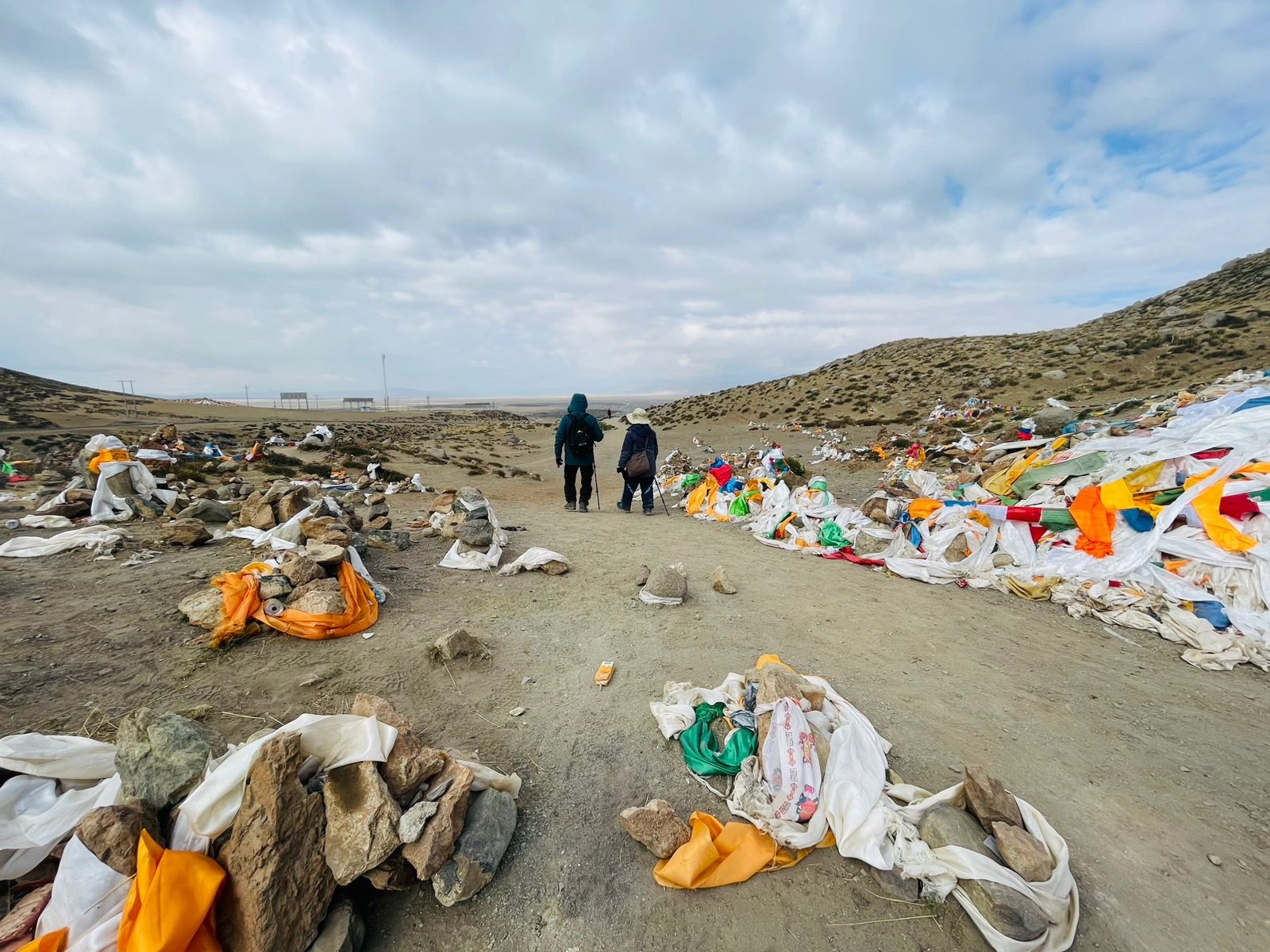
You are walking on rough and rocky terrain where you’ll find shrines formed from stacks of rocks, decorated with strings of prayer flags attached by pilgrims.
On this trail you will be meeting Tibetan Buddhists who are doing full-body prostrations for the entire 52-kilometer kora, which might take them weeks to complete.
The Tarboche flagpole at 25 metres high is rebuilt every Saga Dawa. This is where thousands celebrate, and from where Mt Kailash’s south face rises in the sky, the perfect pyramid, unnaturally symmetrical in this stark landscape. You now get a feel for why so many millions of Hindus, Buddhists, Jains and Bön pos believe that this mountain to be the spiritual centre of the world.
You will make your way back to Darchen by mid-afternoon, then crash - one thing many pilgrims do is blow themselves out in their second week, when tomorrow’s trek should really be approached as your last really tough physical exertion.
Standard guesthouse with attached bathroom in Darchen
Breakfast, Lunch, Dinner, Tea/Coffee, Hot Water or Mineral Water (Veg. Meals by Nepali Sherpa Team)
5000m
20 km Trek
6 to 8 Hours
6 to 7 Hours
Today, you will begin the journey at 7 AM with minimal gear in your daypack, as yaks or porters will carry your baggage. You are hiking up the Lha Chu valley on the route on which Tibetan pilgrims circle the region clockwise (Buddhists) and clockwise (Bon followers). Within half an hour, your breath becomes labored as you tackle a 350 m (1150 ft) increase at a serious altitude.
Tibetan grandmothers in their 80’s seem unfazed-living for decades at this altitude has gifted their bodies with certain adaptations that yours does not yet possess.
The west face of Kailash unfolds before you as you round successive valleys-layers of stratified rock forming almost sheer walls in defiance of conventional mountain forms. You settle into a guesthouse just below Diraphuk Monastery, precariously perched at 5000 meters and clinging to its existence through austere devotion and resourceful living.
Headache, nausea and no appetite are expected for most pilgrims tonight.
Guesthouse in Diraphuk
Breakfast, Lunch, Dinner, Tea/Coffee, Hot Water or Mineral Water (Veg. Meals by Nepali Sherpa Team)
5630m
22 km Trek
8 to 10 Hours
4 to 5 Hours
4 to 5 Hours
You will wake up at 5:00 AM to prepare you for the day that will define this pilgrimage: a 630-meter climb up to the top of Dolma La, and then a knee-collapsing 840-meter drop.
It's into the dark that the trail starts: headlamps cutting circles of light on a path that moves straight up, through piles of rocks and gravelly scree. Every step demands an audible thumping in your chest and air that's never quite enough to make you feel okay. You rest about every twenty or thirty steps.
Some will even turn back at 5,400m if they're feeling ill from the altitude, vomiting from nausea and headache and becoming increasingly confused. Your guide is keeping a careful eye out for all. This mountain doesn't care whether you 'need' to summit.
Thousands of colorful prayer flags flap violently in the high wind at Dolma La, at 5,630 meters, and travelers leave behind clothing which represents reincarnation. Even for rational-minded travelers, it can be emotional to witness, and for some travelers it will break you, and they weep, collapse to the ground, and so on.
Gauri Kund, with its deep emerald waters where Hindu myth says Parvati performed her ablutions. Another monastery, similar to Darchen but called Zutulpuk, where you can have basic accommodations.
You can plan on getting to the monastery between 4:00 and 6:00 PM, totally drained. Many pilgrims decide to skip dinner, their bodies screaming for rest, and pass out to recover from this feat of extreme exertion.
Guesthouse in Zutulpuk
Breakfast, Lunch, Dinner, Tea/Coffee, Hot Water or Mineral Water (Veg. Meals by Nepali Sherpa Team)
4790m
10 km Trek + 240 km Drive
9 to 10 Hours
Minimal
3 to 4 Hours Trek
The final ten kilometres descend into the Dzong Chu valley, which gradually opens into an expanse of high-altitude desert. You will speed up to the finish: the pilgrims, who earlier yesterday could not walk due to their physical suffering, are now walking briskly and cheerfully back to Darchen.
In Darchen, you will meet up with your luggage and then head for your ride in the Landcruisers all the way to Saga.
You will feel the familiar rush of accomplishment, sadness that the spiritual kora is complete, but also an honest sense of relief that your physical suffering is at an end.
You'll drive back over the Tibetan Plateau following the route you came up, the nomadic encampments and yak herds already feeling very comfortable and not at all remote.
The most immediately felt relief from the altitude is its gradual loss-you start to be able to breathe properly again, headaches vanish, appetite comes back with a vengeance-by Saga, you will be stuffing yourself with the Chinese stir fry that was utterly flavourless just six days ago.
The guest-house is palatial after the kora lodgings, although the bathrooms are still squat loos. The majority of pilgrims sleep soundly tonight and for the first time in many, have not breathed through the night.
Your physical body is starting to relax, but the legs will still ache for another 3 or 4 days. Most people find that they feel slightly different on return-whether that's an increased spiritual depth or just a physical response to a very extreme experience is open to the individual to assess.
Hotel in Saga
Breakfast, Lunch, Dinner, Tea/Coffee, Hot Water or Mineral Water (Veg. Meals by Nepali Sherpa Team)
4600m
260 km
7 to 8 Hours
Minimal
7 to 8 Hours
Your trip begins from Saga, heading back towards Nepal at 7 am, the vegetation returning and air thickening once again. 1,800 metres drop, and you will feel an instant change physically; your body thanks you for the thicker atmosphere, and the renewed feeling of energy is instantly noticeable.
Where before lay desolate plains, now stretch alpine forests with juniper and rhododendrons where Tibetan Plateau desert formerly existed. The Chinese border checks at the stations pass smoothly now that they have recognised your group as those coming from the opposite direction.
Back down at 2,800 meters (altitude where Day 4’s headaches struck) feels like the ocean floor now; Kyirung feels almost tropical following three days of more than 4,600m. Back into the guesthouse where, although it’s touch and go, the hot shower is bliss.
Hotel / Guesthouse in Kyirung
Breakfast, Lunch, Dinner, Tea/Coffee, Hot Water or Mineral Water (Veg. Meals by Nepali Sherpa Team)
2800m
160 km
6 to 7 Hours
6 to 7 Hours
On the Chinese side, you will finish the exit procedures at the border, with officers efficiently stamping your passport. Following the downhill direction towards Nepal, you will observe terraced fields where local people can grow things not at the altitude in Tibet, like corn, millet, and vegetables are cultivated in seemingly impossible vertical gardens.
Upon arrival at Rasuwagadhi, Nepali immigration is waiting for you in typical chaos; you might find the difference between the two countries striking. The humidity in the Trishuli River valley and the diesel smoke of the trucks show that you are back to reality in lowland.
Kathmandu welcomes you back with too much traffic, noise and people after the desolation of Tibet. In Thamel, you can find a comfortable hotel with a shower and internet facilities; a menu in the restaurant offering dozens of varieties seems rather amazing for you.
It is almost certain that many of the pilgrims will spend 20-30 minutes under the shower to wash away all the dust from 14 days in Tibet. In the evening, all pilgrims will get together at the farewell dinner to retell the stories and share some of the most touching parts as well as the most difficult parts of the trek.
Hotel Shanker or Ramada Encore Kathmandu or Barahi Kathmandu (4 Star)
Breakfast
Proper nutrition is crucial on the Kailash Mansarovar Pilgrimage to sustain your energy and adapt to the extreme altitudes. The food options between the diverse scene in Kathmandu and the rather austere diet in Tibet are few and far between.
The capital caters for almost any taste with eateries serving Nepalese, Indian, Tibetan, Chinese and Continental fare. Hundreds of restaurants can be found in the Thamel district that can easily cater to vegetarian, vegan and any other dietary requirements.
Authentic and nutrient-rich options include the Nepalese dal bhat (lentil soup with rice), momos (dumplings) and thukpa (noodle soup). Ensure you select well-maintained restaurants, avoid raw food and tap water. Stick to bottled water and cooked food to stay well.
Almost all of our tour packages provide for three meals during the entire trip in Tibet, except during international flights. A Tibetan breakfast consists of Tibetan bread, porridge, boiled eggs, instant noodles, or butter tea. Lunch will feature fried rice, noodle soups, momos, and simple curries in a local restaurant or a packed lunch for a hike.
For dinner, expect hearty and traditional dishes such as rice with vegetable curries, dal, various stir-fried vegetables, potatoes, and bread.
Be sure to enjoy butter tea, made from butter churned from yak milk with butter and salt, a caloric source of energy at high altitude, and tsampa (roasted barley flour).
Simple hot meals such as rice, noodles, soup and vegetables are served in dining tents for all three days of the Kora. Take high-energy snacks, such as chocolates, energy bars, nuts and dried fruit, to boost yourself during steep climbs, particularly across the Dolma La Pass at 5,630 meters.
Elevate intake of carbohydrates (Rice, Bread, Potato); drink 3-4 liters of clean water per day; eat small meals often; have very little food at each time. Strictly avoid any form of alcohol: many pilgrims do not have the appetite for food at the altitude; ensure intake of appropriate nutrition at regular intervals even if you are not hungry.
Accommodation for the holy yatra varies from comfortable Hotels in Kathmandu to modest guest houses and camps in distant Tibet. Knowing what you can expect would certainly make the pilgrims psychologically ready for the yatra.
You can find places to stay at all levels, from guesthouses to luxury hotels in Kathmandu. All our tour packages provide for 3 to 4-star hotels with decent, clean rooms and private en suite bathrooms, running hot water, internet connection and a restaurant.
If you’re looking for something a bit more peaceful, consider staying around Boudhanath or Pashupatinath Temples instead of the more central Thamel. Let this day be for relaxing before things turn extremely primitive!
The hotels or local guesthouses where we stay while travelling in Tibet, such as in Saga, Paryang and Darchen, are local guesthouses or hotels, where we have beds with wool blankets, shared toilets with hot water, and some of these hotels have central heating.
However, the electric power supply may be unstable sometimes, and also not sure about getting hot water every hour of the day. The local guide will try hard to keep our room clean, but it will not reach the standard level you may have in your home country. Some rooms are for 2 to 4 beds, but a room for 2 people might be available with a supplement.
Accommodation during Kailash Parikrama is also extremely basic. In many tour agencies, expect to stay in a tent with a sleeping bag and mattress for 2 nights (at Dirapuk and Zutulpuk). There are a few very basic guesthouses available at some of the monasteries, with unheated dorms where you will get a bed with a mattress and a pit latrine.
It can get to much below freezing point, so you’ll definitely need good winter gear. The porters will do the camping, cooking and all logistics; you can thus be more spiritual.
Don’t forget your sleeping bag with the appropriate temperature (-10C to -20C), sleeping bag liner, pillow (preferably an inflatable one, as these are a must when travelling with earplugs), your headlamp and your personal stuff such as toilet paper and sanitizer for your dorm.
The accommodation in Tibet is very simple, but it adds more meaning to your journey and promotes a spirit of community amongst pilgrims. The Tibetan authorities don’t allow for individual booking; tour companies book hotels and accommodations along with the rest of their travelling package.
We are team of professionals who share a common devotion to the outdoors and are commited to world travel.
Mr. Pem Chhotar Sherpa was born in Solukhumbu. He lived in his village for 16 years and studied under a Lama called Tawa in local language. He used to work as a porter while in Solukhumbu. His maternal uncle has a trekking company and he w...

Born in Burlang, Gorkha District, Ishwor first came to Kathmandu in 1999 to get enrolled in a college to complete his under-graduation.
It was during the final year of his under-graduation that he got into tourism to support his financial instability. A nov...

Things to explore more..

The route from Kathmandu to Kailash and Lake Mansarovar includes an organized multi-day overland trek via Nepal and Tibet. Let’s have a detailed look at it.
Normally all the pilgrims fly to Kathmandu at Tribhuvan International Airport. Take a few days here to acclimatize with the atmosphere, finalize the visa procedures and Permits, and visit important places like the Boudhanath Stupa and the Pashupatinath temple.
Drive for 145km (6 to 7 hours by private vehicle) from Kathmandu to the Rasuwagadhi-Kerung border. The trekking will lead through spectacular views over the terraced rice fields clinging to hillsides, Tamang villages and beautiful views of the Himalayan ranges.
Enter Tibet from the Kerung (Gyirong) border after the immigration procedures at the border. Kerung is a small Tibetan town that will be our first overnight stop. There are very simple hotels available here.
Now we begin an overland adventure on a 1,200 km trip in tough 4WD vehicles from Kerung to Mount Kailash. We drive for four to five days, making overnight stops at Saga, Paryang and Manasarovar Lake as we go through high mountain plateaus over 5,000 meters above sea level.
Arrive at the holy Lake Mansarovar (4590m) to perform prayers, ceremonies and rituals. Many pilgrims have a holy dip in the serene turquoise water of the lake. It is very much a divine and auspicious occurrence.
The parikrama of Mount Kailash starts at Darchen. It is the base camp for Mount Kailash, located a few kilometers from Lake Mansarovar. Have a nice rest at Darchen and prepare for the holy journey of circumnavigating Mount Kailash.
If time is the priority for a pilgrim, there are helicopter services from Kathmandu-Simikot-Hilsa (border of Nepal-Tibet), which cuts the travel duration of days into a few hours, but the cost is very expensive (additional $4000- $6000)
The whole journey to Mount Kailash from Kathmandu takes 8 to 10 days, and you have an auspicious and scenic experience of visiting two marvelous countries.
The Kathmandu and Kailash Mansarovar tour is a life changing journey for you, both physically and mental both spiritually, and physically. From the moment you reach Kathmandu city, your adventure takes you slowly from urban luxury in Kathmandu city into the wilderness of the Himalayas.
Firstly, we will explore Kathmandu city by visiting holy temples and then after we drive towards the Nepal-China border town of Rasuwagadhi and enter Tibet from Kerung and travel further with an overland journey over the vast plateau of Tibet in 4-5 days, driving with amazing views of mountains and monasteries and the plain and beautiful desert of Tibet.
When we reach Darchen, the spiritual vibe intensifies even further, with the stature of Mount Kailash rising in our faces. The 52km parikrama lasts two to three days, or the spiritual core of the pilgrimage that requires a real test of physical strength and will, crossing Dolma La Pass at 5,630m.
You must come prepared for serious acclimatization issues-headaches, short-breathed, and diminished appetite are the usual fare. Where accommodation varies from simple guesthouses to camping tents. Food will slowly change from the variety available at Kathmandu’s numerous eateries to the simple rice, noodles and Tibetan delicacies.
Most of all, you can expect moments of profound spiritual awakening, immense inner transformation, and unparalleled peace at the foot of the holy Mount Kailash and the crystal waters of Lake Mansarovar.
Spring is the perfect time to go on the sacred Kathmandu and Kailash Mansarovar Pilgrimage. The months of Spring see temperatures between 5 °C and 20 °C, which makes the high-altitude trek more bearable. The snow starts to melt, hence unblocking mountain passes which would have been otherwise closed during winter.
This period guarantees clear weather with very little precipitation, offering you amazing views of Mount Kailash and other nearby peaks of the Himalayas. As spring sets in, you’ll witness rhododendrons and alpine blossoms scattered around to make your pilgrimage even more rewarding.
Circumambulation (Kora or Parikrama) around Mount Kailash will also be convenient due to stable and largely dry paths.
Yet, more people visit as pilgrims in Spring, so it is possible that you have to book in advance for hotels and permits. You may find it cold at night, especially in the upper region, such as on Lake Mansarovar, 4,590m. Be equipped with warm clothes.
Autumn, second only to spring, is considered an ideal time for Kailash Mansarovar by seasoned pilgrims. After the monsoon ends, the air turns pristine and clear, lending unobstructed views of the holy Mount Kailash and the striking sapphire blue waters of Lake Mansarovar.
September and October see calm weather with daytime temperature hovering between 0 degrees C and 15 degrees C. Post-monsoon clarity leaves the land rejuvenated, while the low amount of rainfall offers stable trekking routes and well-consolidated trekking trails along the 52-kilometre-long parikrama route.
Since autumn coincides with two of the major Hindu festival times, there is another element of spiritual fulfillment added to the expedition. Due to good visibility of the surrounding peaks during this time, the season is great for capturing photographs and even for meditation in and around the holy spots.
However, as autumn moves towards November, it gets increasingly cold at night and can even freeze.
It does tend to draw fewer pilgrims than the spring season; however, the places get filled up rather quickly, and for all the reasons mentioned above, the autumn season is recommended for the pilgrimage.
Kathmandu and Kailash Mansarovar trips are difficult during the off-season months of November to March and July to August, which is why it is not recommended for the majority of travelers.
In the winter months of November to March, the weather will be very harsh, with temperatures that can dip to -20C and even lower at high altitudes, where the altitude trekking will be dangerous and life-threatening if the traveler doesn't have adequate experience and equipment.
The mountain pass, particularly Dolma La Pass (5,630m), is covered in deep snow during winters, where the parikrama can become impossible or fatal, and most guesthouses along the path are closed, eliminating all necessary facilities.
Nepal faces heavy rain and landslides, blocking the roads during monsoon, and also reducing visibility in the mountains during July-August.
In winter, Lake Mansarovar is often frozen, and summer monsoons make the treks muddy and dangerous. Emergency rescue helicopters, and generally all helicopter travel and emergency medical evacuations, are also affected by the monsoons.
During the off-season, permit requirements to access these areas are usually made even stricter by the Chinese government. Helicopter services are not very reliable during the off-season.
Experienced mountaineers who have appropriate gear and backup could possibly attempt the journey during the winter, though it's still discouraged. There is a belief that the spiritual merit one earns by doing the journey outweighs the risks, but life's importance is far greater than that.
Reaching Kailash and Manasarovar requires the appropriate arrangement of transport, as it crosses the remote land of the Himalaya that spans both Nepal and Tibet. Having prior knowledge about available modes of transportation for the Kailash trek helps to make the trip safer and more pleasant.
Your first port of entry to Nepal will likely be the Tribhuvan International Airport in the capital city of Kathmandu. Airlines such as Air India, Qatar Airways, Emirates, Turkish Airlines, and China Southern offer international flights connecting Kathmandu with the rest of the world.
Direct flight connections are mainly to and from the Asian hub including Delhi, Mumbai, Bangkok, Kuala Lumpur, Singapore and a host of others.
Many visitors who fly to Kathmandu plan for a 2-3 day stopover to acclimatise and get familiarised with the city as well as pay a visit to the Pashupatinath temple, the most sacred Hindu shrine.
After the 2015 earthquake destroyed the original Kodari border pass, the Rasuwagadhi-Kerung border crossing is the primary gateway to Tibet. You can expect to travel from Kathmandu to the border (approx. 145km / 6-7 hours) either by private car or tourist bus
This will be a ride with stunning views across terraced fields, picturesque Tamang settlements, and spectacular views of the Himalayas to the China-Nepal border at Rasuwagadhi. Upon clearing immigration and crossing into Tibet, you will be transferred to your Chinese vehicle at the Tibetan town of Kerung (Gyirong).
Despite being the first route and still in use for transport and some tour routes, the road to Kerung has a higher possibility of being affected by earthquakes or other damage, so at times the road could be blocked. When it is open, the travel time to the border is quite comparable to the other routes, but the road surface is much worse.
The main mode of transport across the Tibetan segment of the journey are sturdy 4WD vehicle (Land Cruiser and alike). Usually, they have room for 4-5 passengers and luggage so as not to be cramped for the long hours on the road crossing the Tibetan Plateau.
Kerung to Mount Kailash approx 1,200km, over 4-5 days. This route takes us to some of the world’s most amazing scenery.
The route is covered in a 4WD with experienced professional Tibetan drivers. This journey takes us across some of the world's highest mountain passes, rivers and unpaved roads in high altitude.
You are going to cover around 200km to 350km per day, while passing through points like checkpoints, Monastery and viewing spots. Our vehicles come equipped with oxygen cylinders, medical kits and communication devices to assist you. The slower driving time helps you adjust to the high altitude above 5000m.
For those who are short on time or concerned about health, Helicopter services are available from Kathmandu Tribhuvan International Airport straight to Simikot in the far west of Nepal and then to Hilsa in Nepal and the border with Tibet, and from where it takes about two days of Road Journey to Mt Kailash.
This service is significantly expensive (+$4000 to +$6000) in addition to the standard tour cost. But it shortens the Journey by 3-4 Days.
Weather conditions play a vital role in such journeys, and Helicopter services are highly weather-dependent.
You can also take a domestic flight to the nearest city, which may be Lhasa, and then travel by land. It also includes some extra hours of travel and the time you take for acclimatizing yourself. Therefore, travel by land is the best way.
The Kathmandu and Kailash Mansarovar Pilgrimage takes you through a sensitive international border zone and several areas in Tibet that are closed off to unauthorized visitors, making multiple permits essential. Familiarise yourself with these regulations to have a hassle-free experience, avoiding last-minute snags.
Nepal Entry: You will need a Nepal visa to enter the country as an international tourist, which can be easily obtained at Tribhuvan International Airport upon arrival for most nationalities, with the price of a visa ranging from $30-$50 based on the duration of stay. Check for at least 6 months' validity and at least 2 blank pages.
Chinese Group Visa: On the other hand, when you travel to China from Nepal, you are given a Chinese Group Visa that is obtained in Kathmandu, the capital city. For processing, you will need to be in Kathmandu for at least 5 days prior to your tour starting, since this typically takes 4-6 working days (during busy times and around public holidays, it can take longer).
Original passport plus photo and a duly filled visa application will need to be submitted to your officially recognized travel partner; no personal application will be taken by any Chinese embassy or consulate. The Group Visa will be used as one group document, and so you will travel to each and every place in Tibet as part of your appointed group.
Tibet Travel Permit (TTP): This is the principal document delivered by the Tibet Tourism Bureau that every foreign visitor needs to get into Tibet. A tour operator arranges the permit, and it is not possible to apply for this individually. Without a TTP, you would not be allowed to cross the Nepal-Tibet border or even enter Tibet.
Additional Permits: Given the location of Mount Kailash, it is not only needed to have a TTP, but there are 3 more additional permits: Alien Travel Permit, Military Permit and Border Permit because this area is in close border with international boundaries. These three permits are also arranged by the tour operator when you book your package.
Important Regulations: There’s no independent trip in Tibet; foreigners must go through the authorised travel agencies that also supply the guide, transport and accommodation. The permits will be kept by your guide throughout your entire trip, and shown every time the police stop you for a check at many checkpoints, and there are a lot. Photography is not allowed at the army buildings, also at some monasteries. Obey the guide and the traditional way of life in Tibet. Keep your passport and any permit always with you.
What You’ll Need:
A valid Passport: Must have at least 6 months' validity after the trip and at least 2-3 empty pages.
A Visa for Nepal: Typically this is easy to get on arrival at Kathmandu Airport or apply at a Nepalese embassy before you go.
Chinese Group Visa: If you plan to cross into Tibet from Nepal, a Group Chinese Visa is required, and this has to be obtained from Kathmandu by your official tour agency.
Tibet Travel Permit (TTP): Tibet Travel Permit is an official permit for foreign citizens entering Tibet and has to be arranged by your tour operator through the Tibet Tourism Bureau.
Additional Tibet Permits: Additional permits such as Alien Travel Permit, Military Permit, and Border Permit will be required if you wish to travel to Western Tibet, such as Mount Kailash.
Passport-Size Photographs: We recommend carrying around 4 to 6 recent passport-size pictures (with white background) in your photo album or with your wallet, needed for visas and permits.
Yes, Ashtapad is the main Nirvana sthala of Jains and was the place where the 1st tirthankara of Jains (Lord Rishabhdev) attained Moksha. Tirthapuri is believed to be a site where Lord Vishnu for slayed Bhasmasura with Mohini avatar for Hindus and an important meditation centre for Guru Rinpoche for Buddhists.
There are no entry procedures into the inner routes of Ashtapad are no longer allowed and have been sealed by the Tibet Tourism Bureau because of rockfall dangers and ecological security measures. So the Yatra is to be made to a viewing point near Serlung Gompa where we could get Darshan of the sacred "Eight Steps" on the South face of Mt. Kailash.
Indian passport holders (Yatris) require processing travel documents in group thru the Pilgrim Center (FAO) Lhasa, Tibet. NRIs with any foreign passport(USA, UK or Canadian) are treated as foreign tourists, who can get a Tibet travel permit (TTP) and a personalised tour program.
Tirthapuri lies 65km west of Darchen along the valley of the Sutlej River. The natural springs are exceptionally hot, but this heat is redirected into publicly available pools where pilgrims commonly perform a foot soak or a bath to imbibe the plentiful sulfurous medicinal properties.
During the Tirthapuri Kora, pilgrims reach blindly into a large rock cavity at the foot of a Sacred Prayer Wheel to pluck two small stones. Drawing two white stones means the pilgrim is accumulating exceptionally good karma; one black and one white suggests an imbalanced karma, which, when combined with certain positive karma, may be easily cleansed with a moderate dietary purge; and two black ones indicate substantial negative karma, which requires an immediate and stringent lifestyle purification.
As the long journey along Tirthapuri accommodates countless orthodox Hindu & Jain pilgrims, high-end tour agencies will provide a catering team that accompanies the expedition, who prepare food to an exceedingly high hygienic standard. They cook nothing but entirely strictly Vegetarian Satvik & Jain meals which do not include onions, garlic and root vegetables.
Physical grading difficulty is strenuous. Tirthapuri can be reached by jeep with simple flat walking, whereas the viewpoint near Ashtapad is at about 4900 mtrs altitude. Trekkers can’t breathe or tolerate the high altitude and cold and can only proceed to high altitude after medical fitness and prior cardio for about 2-3 months.
Costs will vary depending on your selected route. Overland standard tour packages that take the bus/coach up and down the Kyirong border cost around $1,350 - $2,000 USD. High-end and fast-track helicopter/ground tour packages that avoid the physically demanding travel options up and down the country (via Nepalgunj/Simikot) cost in excess of $2,850 USD.
Vehicles can reach very close to the hot springs and the easy 1-hour Kora. Ashtapad viewpoint needs some walking trek as well, and you will be at 4,900 meters. In such a case, it is advisable to request special pony/yak supports, or book fast-track helicopter packages.
The normal Outer Kora permit does not extend to the areas of the fragile inner valley. There must be a specific operator to obtain separate permits from the security authorities, organize altitude oxygen equipment, and negotiate a complicated system of approvals from the Tibet Military Bureau to access restricted inner valley areas.





 Google
 Tripadvisor